

D'Angelo's deep cuts
An altar for the god of baby-making music.

This croon, this howl, has been reverberating in my head for the past week since D’Angelo left Earth. It sends me back to the turn of our century, an era where the world is decaying into war but ripening in its spirit. Music is undergoing an identity crisis, or maybe it’s just me in conversation with my headphones – hip-hop becomes a different thing than rap, and soul splinters from R&B. It feels like a rupture. It sounds like a revolution.
The month is January and the year is 2000. I’m in the 11th grade, and my CD wallet is an encyclopedia of the Soulquarians. The Bad Boy era is over, and my friends and I have traded our shiny suits for earth tones. We’ve become conscious – the softer-spoken but more expansive rough draft for woke. Suddenly, every room is dimly lit burgundy and thick with the musk of Nag Champa burning by the bundle. Everyone is wearing beanie caps. Spoken word is hella deep. Neo-soul is hella sexy. It is here where I come of age, beckoned by this croon, this howl.
I follow the voice, a falsetto that swells into a bellow, and it leads toVoodoo – D’Angelo’s second album perched in the canon of my formidable years, a sonic universe also consisting of Things Fall Apart, Mama’s Gun, Aquemini, Lucy Pearl, and Black on Both Sides. It hits like puberty. The video for “Untitled (How Does It Feel),” where D’Angelo appears as nude as televisibly-admissible, makes BET Uncut look like Sesame Street. It instantly turns the girls at school into women, and immediately inspires me to start doing crunches.
Part of the Voodoo lore is that it emerged after an intense dry spell – a writer’s block that possessed the singer following the success of 1995’s Brown Sugar. For an artist in his early 20s, the five-year gap must’ve felt like an eternity. On hindsight, it’s an appropriate spacing between two masterpieces.
It's hard not to be superstitious about Voodoo, the album that simultaneously marks D’Angelo’s ascent and downfall. The record releases as an instant classic, breaking the sophomore curse so dramatically that people begin whispering about him as the Mavin Gaye reincarnate. On his album cover, he appears as an apparition – black, white, and shirtless, lined with serial numbers and handwritten scribbles, gazing at the camera like he is putting a hex on the anthropologist that seeks to make him a specimen. But that photo, along with the “Untitled” video, unintentionally and tragically turns him exactly into that – a specimen to look at, to gawk at, rather than to listen to. On tour, people begin interrupting his performances mid-wail, demanding that he “take it off.”
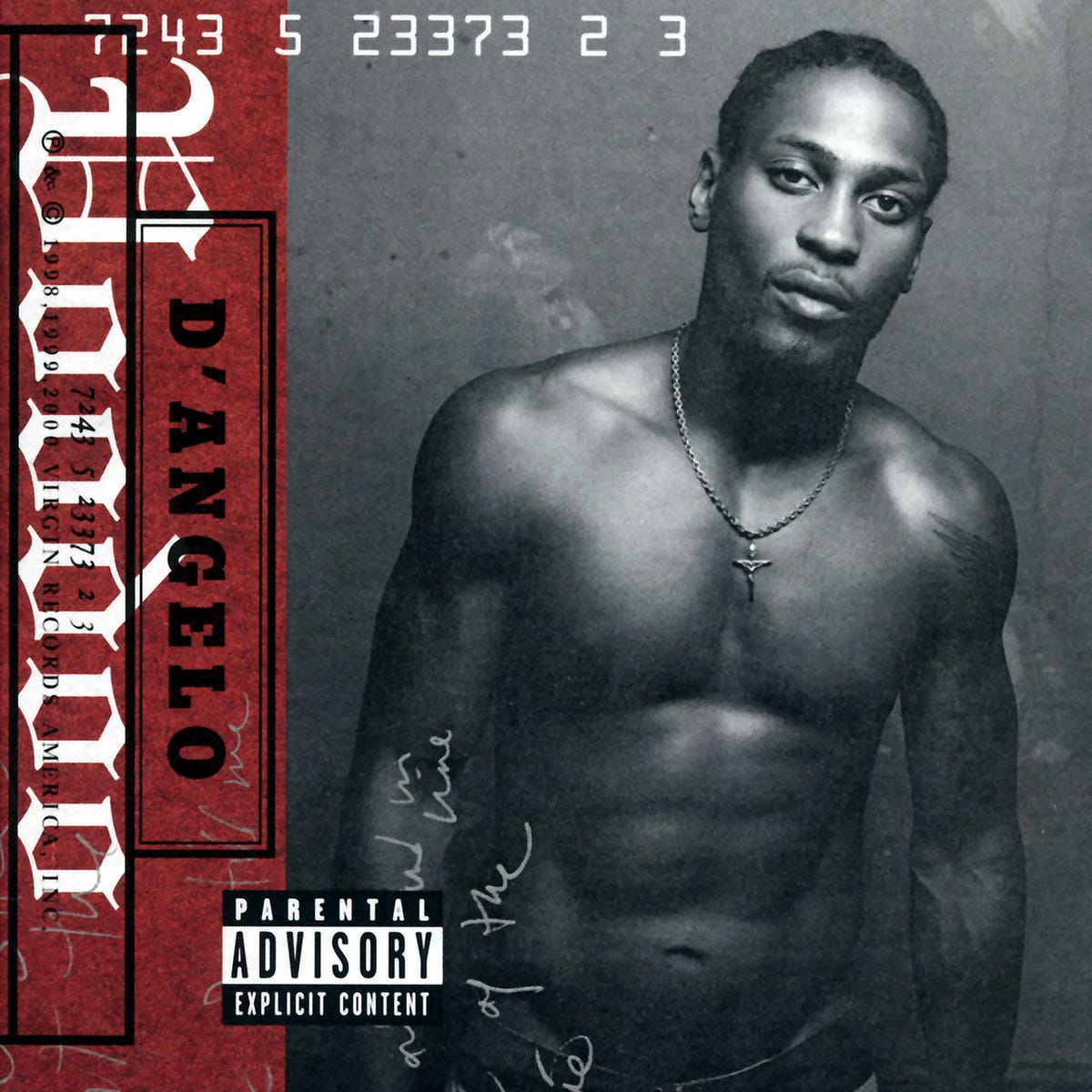
What a damned shame. Musically, Voodoo is a spellbinding work of art – a contortion of Black music’s timeline, invoking the ancestors and evoking the future. Its sparse drums, twinkling horns, and inebriating chords define the genre of neo-soul, only to snap it apart. The vocals wash over you like a mud bath. It’s rhythm, it’s blues, it’s funk, it’s Afrobeat, it’s dark magic.
Demons screaming in my ear
All my anger all my fear
If I holler let them hear
In this spinning sphere
Fuck the slice we want the pie
Why ask why till we fry
Watch us all stand in line
For a slice of the devil’s pie
If Brown Sugar made me like D’Angelo, and Voodoo made me love D’Angelo, then it was the liminal space after that which made me feel D’Angelo. He was absent but not, dropping in at just the right times in the form of features and lost tapes. I nursed my first breakup to “Be Here,” his slumpy duet with Raphael Saadiq. Four years later, felled by yet another broken heart, I surfaced from a late-night internet wormhole having discovered the demo version of “Africa.” I treasured my excavation, and inserted it into the playlist that quelled my restless mind to sleep throughout the summer of 2005. To this day, I can’t hear the intro without the back of my skull tingling. It is, and will probably always be, my favorite of his musical offerings.
A close second is his cover of Funkadelic’s “I’ll Stay,” from the late Roy Hargrove’s 2003 album, Hard Groove. This song oozes from the speaker. The texture of D’Angelo’s voice oscillates between silk and sandpaper. I heard it before its original, and it may have been my gateway drug to George Clinton – which is to say, I owe this track everything.
We didn’t hear much from D’Angelo after that. As the years progressed, he suffered from the ills of fame and recoiled from the public eye. Following a 2005 arrest, he surfaced online via a disheveled mugshot, and the internet was unkind (as it tends to be). According to the chatter, his greatest transgression wasn’t the DUI or the addictions, but the weight he gained. No matter that the music we knew him by foretold the temptation and grief and disillusion that now tormented him. His six-pack was of the past, so he might as well have been too.
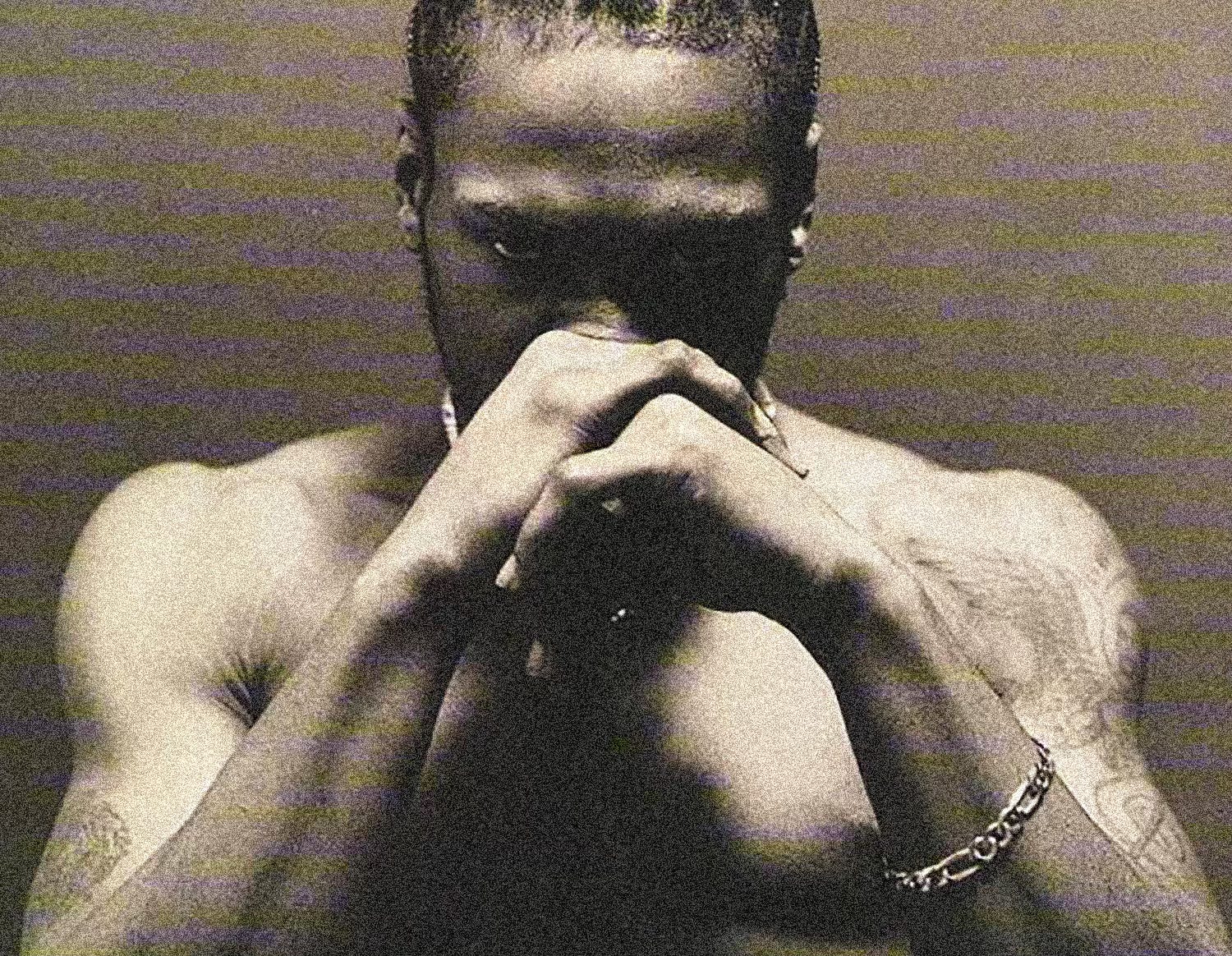
The young folks who find Frank Ocean unbearably elusive don’t know the anguish of awaiting D’Angelo’s next album for a decade and a half. Eras came and went while we yearned for another slice of devil’s pie. The Bush administration and most of Obama’s. The War on Terror. The entire lifespan of Myspace. The slow death of MTV. Where the fuck was D’Angelo?
In 2007, Questlove leaked a demo of “Really Love” on an Australian radio show, and it quickly spread through Okayplayer message boards and the rest of the blog circuit. It was ectoplasm in the ear. The track was severely unmixed and laced with Quest’s vocal watermarks, but I put it on constant rotation anyway. Some of us remember how we cherished that mp3, how we wore it out, like the last voice message of a loved one who ghosted us. We waited seven whole years to hear it in polished form.
This is why it landed like a cosmic joke when, in the last breaths of 2014, D’Angelo dropped Black Messiah with a disclaimer that the release was “pushed up.” That fall, demonstrators flooded the streets of Ferguson, and then the rest of the country, in response to the killing of Michael Brown. The album cover featured no image of the singer, no bare chest with cut abs, just hands raised like they are reaching for the edge of a raft. There were no music videos. I listened front to back, anxious that I might wake up realizing it was all a fever dream. I pre-ordered the vinyl twice, as if I could take one with me to the afterlife.
This was the year I proposed. We slow-danced in our D.C. apartment to “Betray My Heart.”
Through the storm, through the rain
I’ll come running to ease your pain
Like the rails that cross the trains
Like the blood in your veins
I will never betray my heart
Child, why am I telling you all this, and what does it have to do with fatherhood? Maybe it’s my long-winded way of doing the most-dad-thing, which is to declare that whatever music of your day will be, it will surely pale in comparison to that of mine. That your father is a self-proclaimed music snob, which is why I’ve been willing to go to war against a 3-year-old over the car stereo – and why I felt so defeated when Spotify recently congratulated me for being the top listener of the Planes 2 soundtrack.
I can imagine myself one day sitting you down with Voodoo, and you looking at me like I’m trying to make you read Dickens. And then years later, you schooling me to D’Angelo, and how I’ll roll my eyes the way my parents did when I informed them that I had “discovered” Sade.
I know it’s a sign of aging when the musicians I grew up listening to start passing away in quicker succession. Since D’Angelo’s death, I’ve lurked his songs on Youtube and read the comments laid like roses at his feet. I haven’t been able to get through any of them without welling up in my eyes – a tear for my adolescence, and how he coaxed me away from top 40 to listen more deeply; a tear for how he was discarded for his allergy to the industry; a tear for the tenacity that empowered him to resurrect his career despite all that, during a time when we needed at least something to be right with the world.
As we put a legend to rest, I’m reminded that D’Angelo never wanted to be known for his body, but for his sound. If there’s any comfort in this moment, it’s knowing that this is how you’ll recognize him from now on – this sound, this croon, this howl.
I enjoyed this read Adriel. What fascinated me about the voodoo album is that even though Dilla does not take any production credit on any of the tracks, there is a significant influence on the rhythm and the percussion in this album.
loved reading this Adriel, thank you!