

Caught up in the moment
The time-consuming practice of documenting everything.

One of the most moving films I watched in 2025 was Third Act, a documentary about Robert Nakamura, the filmmaker who pioneered Asian American cinema. Directed by his son (and my friend) Tad, it was originally conceived as a story of Robert’s life – but a Parkinson’s diagnosis that surfaced midway through the production turned it also into a story of his death.
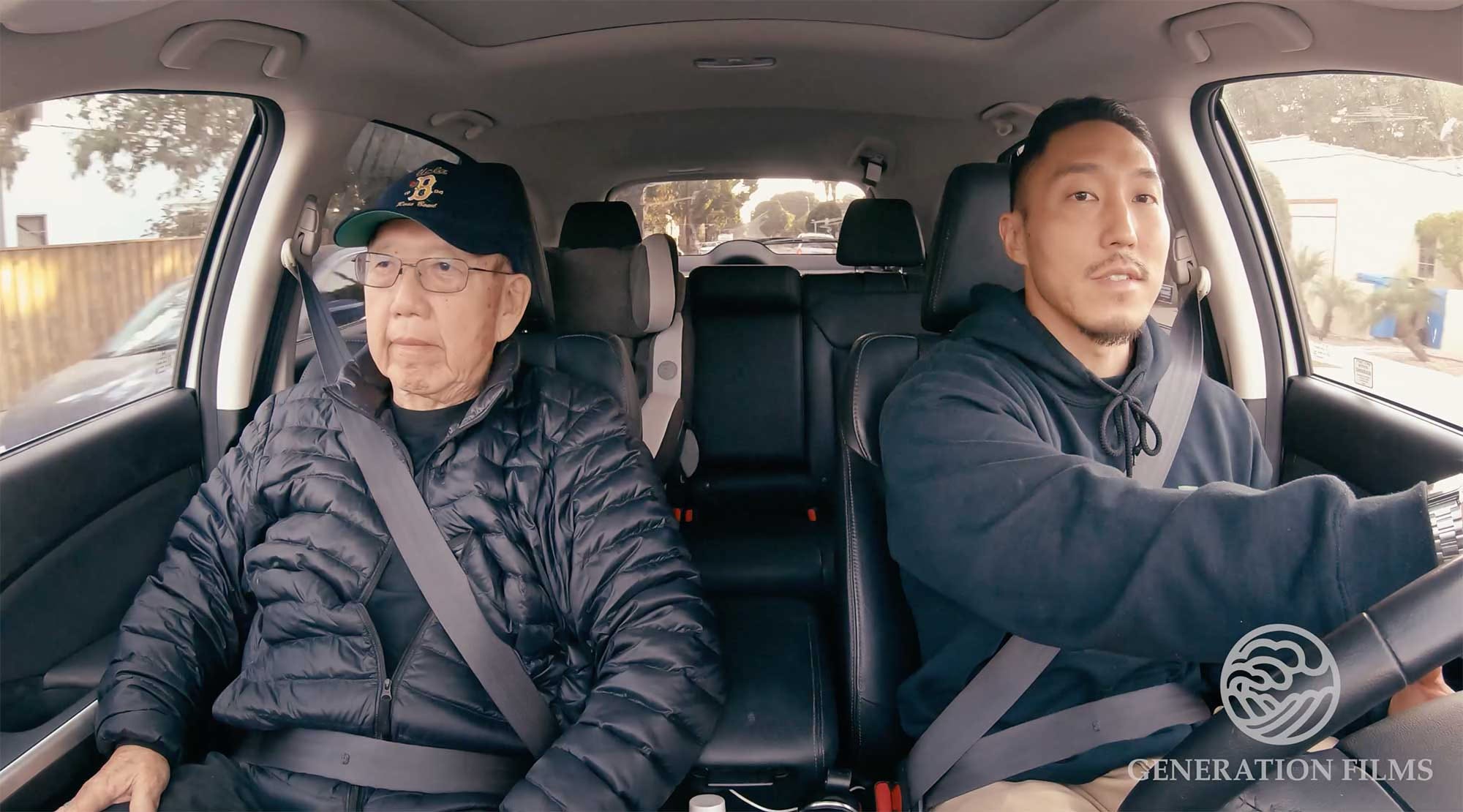
One scene in particular has stuck with me: We see Tad and Robert through the lens of a dashboard cam as they drive around LA. The two are discussing what it means to complete the film while Robert is still alive (it gets meta like that). The holidays are coming up, and Tad is torn about whether to bring the camera to what might be their last Thanksgiving together. “Part of me wants to just live in the moment,” he admits. “Do I cherish that and really enjoy it? Or do I kind of turn it into a production shoot?”
“You’ve gotta turn it into a production shoot,” says Robert, without hesitation. It’s a moment that reveals what distinguishes an artist from others: most people see art as a part of life; artists see art as life itself. In Robert’s world, everything is intertwined with filmmaking, even family time. Third Act is filled with scenes about the impression Robert’s filmmaking legacy left on Tad – but it’s complicated. Robert’s love for documentaries was so magnetic that it shaped Tad’s universe, eventually leading him to follow a similar path. But it’s also this love that set up every aspect of life for a potential audience.
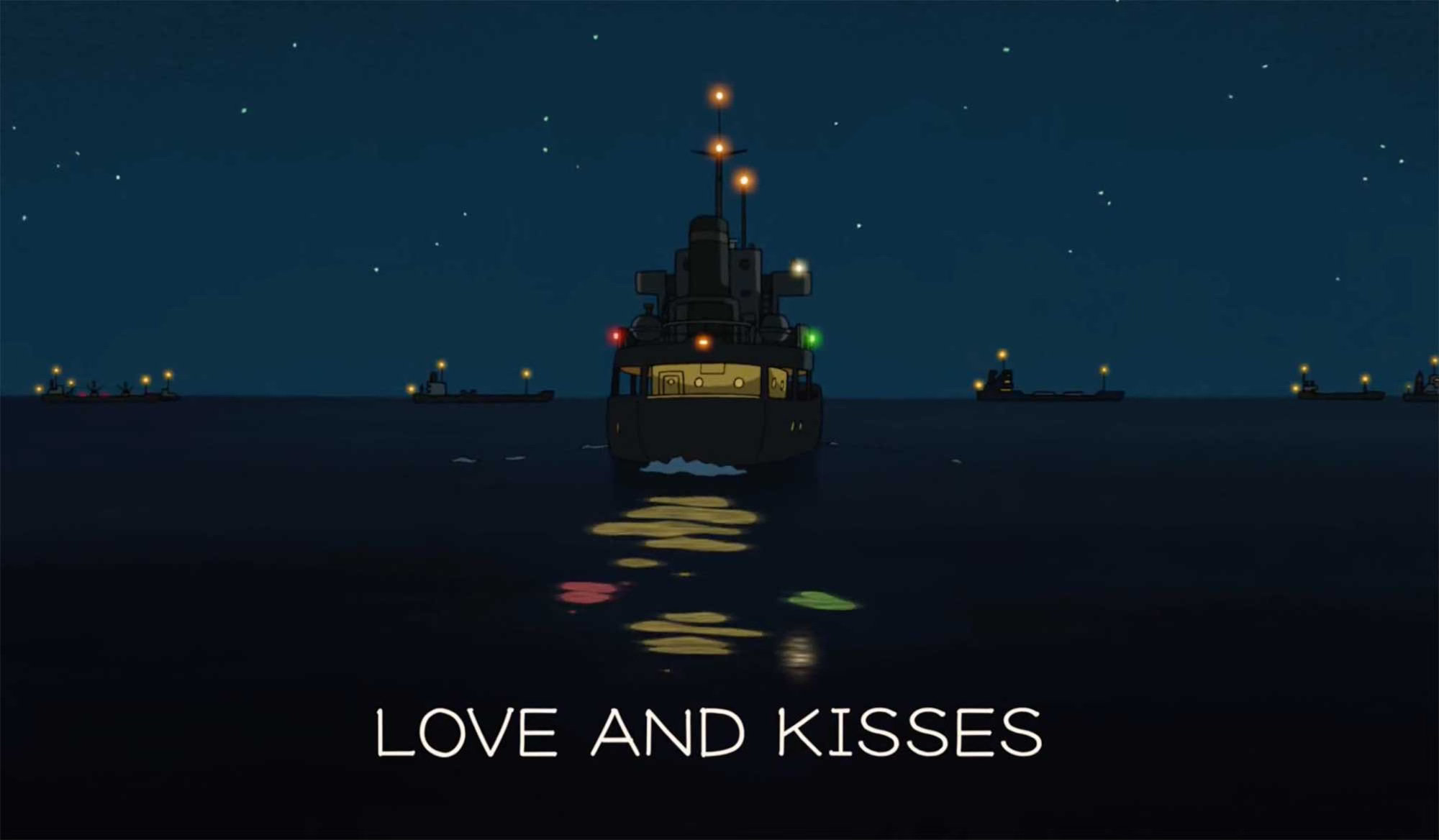
Art is a jealous god that demands a full-bodied kind of attention, an attention that strains the very relationships that inspire the art into existence. There is a lineage of stories about people who were great artists but horrible parents – who brought joy to the masses at the cost of isolating their kin. Hayao Miyazaki was so obsessed with making films that connect with children that he neglected his own son. “Not that I was running away,” he once said, “but the result was the same.” He said that he should apologize, but it’s unclear if he ever has. Some die-hard fans have suggested that his affection for his family is encrypted into his films: like in Ponyo, through a captain at sea, via light signals, in morse code.
My child, there has been a guilt swelling within me for the past couple of months, ever since the last time I wrote for Going Pop eons ago. It was autumn then, and we were in New Mexico to tour Ways of Knowing, the film your mom and I have been working on since long before you were born. That morning we plopped you in front ofTotoro so we could catch up on our own stuff. For me, that meant taking the time to write a eulogy for D’Angelo. I sat at the table next to you, typing feverishly while the sound of The Messiah bled from my earbuds. From time to time, you would ask me to watch with you, to which I would respond, I can’t right now. After all, I was engaged in my original passion, the one I’ve carried through life’s countless writer’s blocks and dry spells, the one other artists asked how I would maintain once I became a parent. Still, the paradox never escaped me: I can’t spend time with you right now, I’m too busy writing about how much I cherish spending time with you.
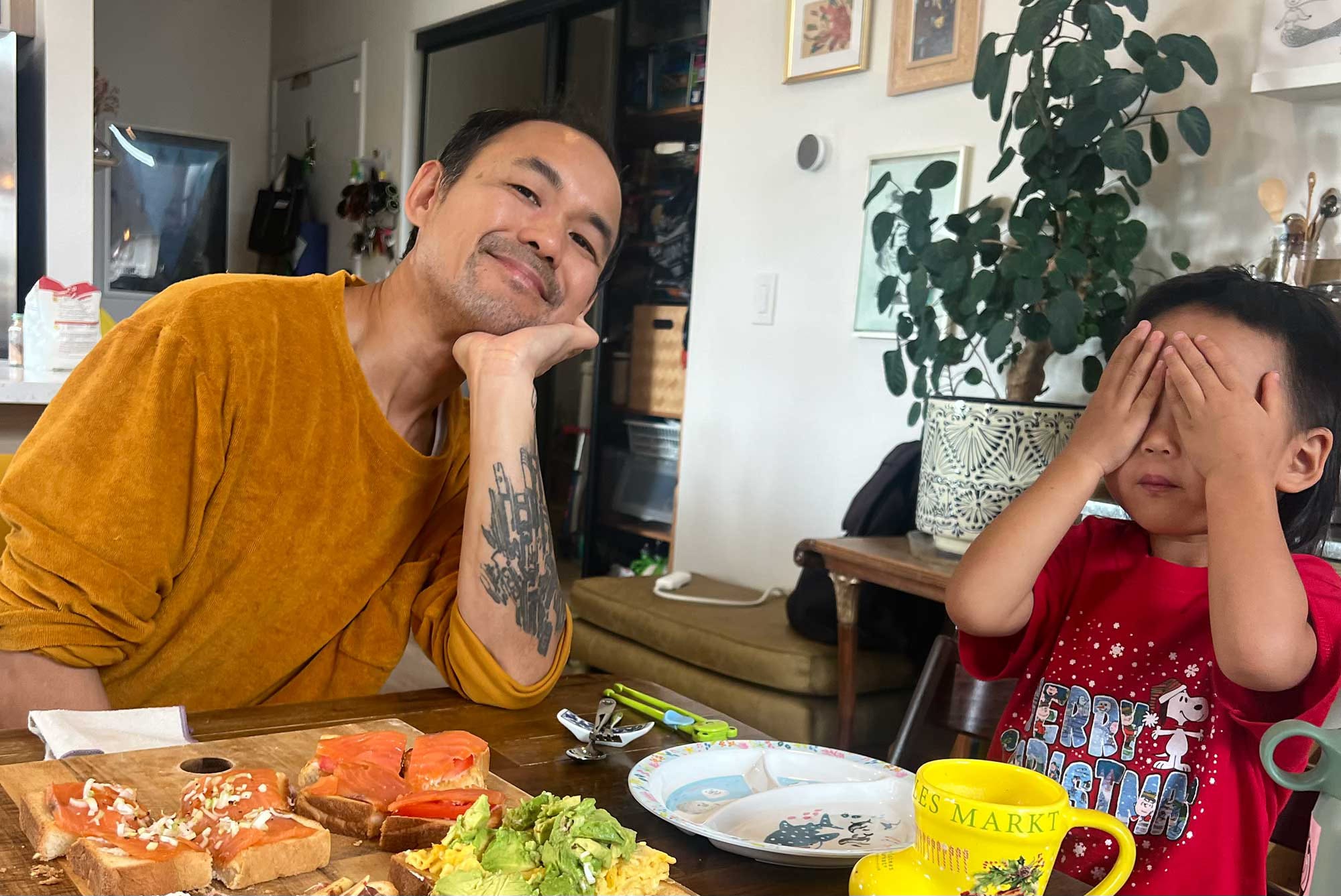
Yet, for all the grief I give myself for not documenting enough of our precious moments, the truth is that I’ve become a memory hoarder like most other parents. There was never a time in your life when I wasn’t always all up in your face with a camera, snapping a dozen shots of you doing every benign thing. But it drives you crazy, and lately you’ve been boycotting photos, throwing your palms over your face whenever you see me whip out my phone. “No camera!” you shout. “But it’s for our future selves to remember,” I plead. You could give a fuck about our future selves.
At the age of three, the notion of time is still a mysterious thing to you. I observe as you try to make sense of the concreteness of what time is against the elasticity of how time feels. How can the five minutes that pass like a blip while playing at the park be the same five minutes that drag for an eternity while sitting in the carseat? You’ve been asking for things to happen now now now, something I don’t attribute to you being impatient, but your unfamiliarity with the concept of process. You ask to be in places now now now, and I explain that we can’t teleport. You want the muffins we just put in the oven now now now, and I explain that we can’t eat raw dough. I’ve become that buzzkill. You respond by asking instead for your favorite breakfast: a frozen waffle that’s still frozen. I digress.
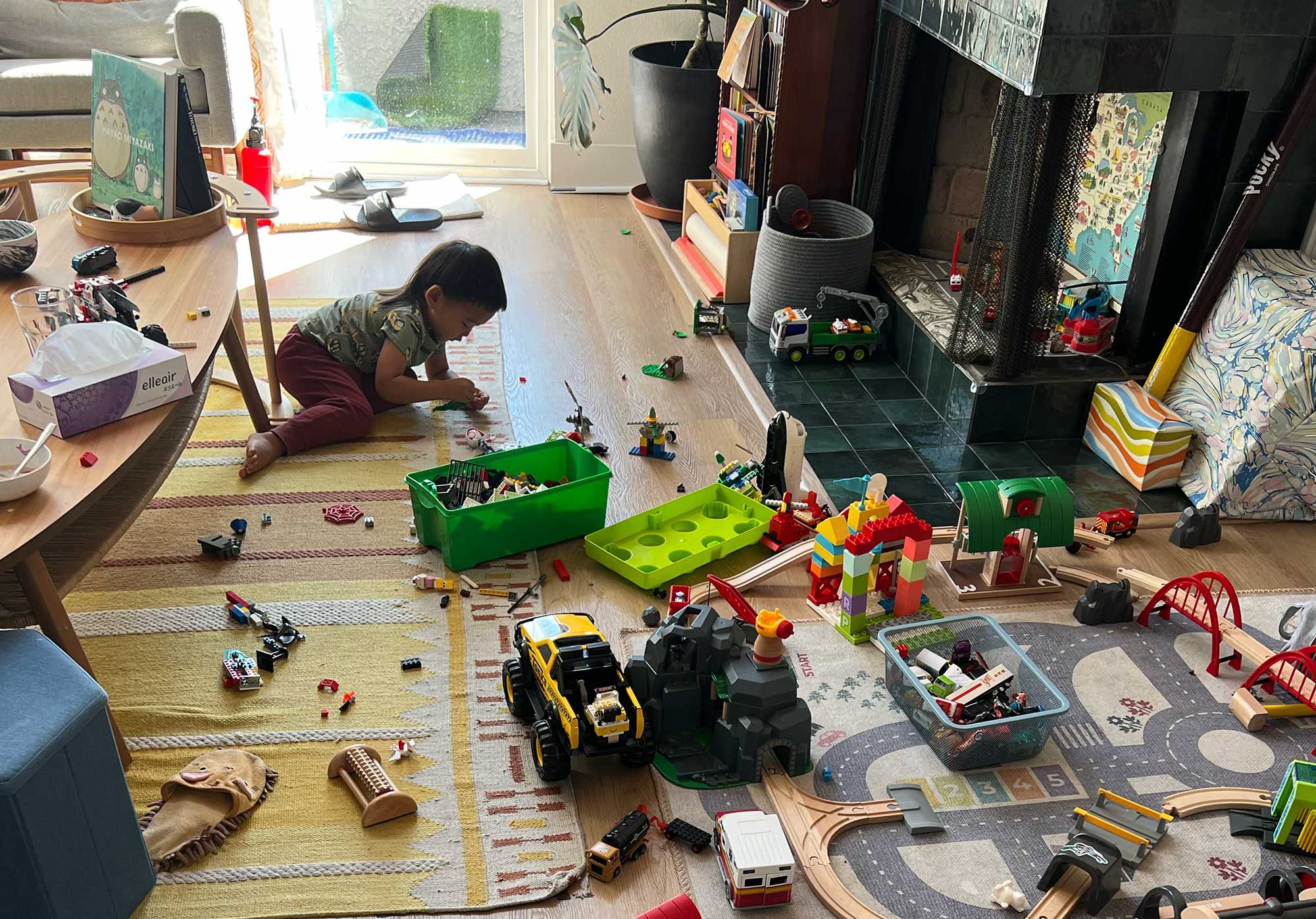
You want things now now now because now now now is all you know. You’re too young to hold deep memories or foresee distant futures. You’re fully attuned to something that grown-ups find elusive: the present moment. Grown-ups go on 10-day silent retreats and expensive vacations in order to find it. But you, child, are locked in, immersed in whatever now you find yourself in, whether you like it or not. Most days, the only thing you ask of me is to sit in the living room and play toys with you, and I find it to be one of the most challenging things to sustain without my mind wandering off. “Dad!” you call, snapping me back to reality. “You’re an ambulance, remember?”
I’m no Robert Nakamura. I’ve been struggling to find the sweet spot he did: to simultaneously be a great artist and a great parent. But whenever I think I’m succeeding at one, I suspect I’m failing at the other. After that D’Angelo piece, I spent the rest of the year focusing on being as present with you as possible, and trying not to be too hard on myself for letting my self-imposed writing deadlines pass. You learned to point at a map and say “Navajoland,” where we hiked mountains that were once sucked dry by industry, and then rehabilitated by the people who’ve always called it home. You learned to say “Japan,” where we rode bullet trains to cities that withstood atomic bombings and where children today frolic around monuments for schools that were eviscerated 80 years ago. Through those months, I realized how unprepared I was to explain the concept of history to a toddler who was still figuring out what five minutes is. We shared joy and pain, experiences I had deep thoughts about, that could’ve made for great material.
But I didn’t write any of that shit down, and most of it is probably gone forever. And I’m learning that living in some moments without feeling the need to seize them is itself a practice, a discipline, an art.
I think about this tension all the time as a parent. Especially now as my own mother is going through Alzheimer's. Wondering about our shared DNA and what I want to capture so I can remember as much as possible when I'm older. There's also an interesting thing our kid does where she sees our digital photo frame and will say, "I remember that time," and recount the "memory" (i.e., story she's heard us tell) as if she has perfect recall from 9 months old.